
A safety inspection might uncover an unguarded machine. Air monitoring can reveal a less visible problem: chemical exposure beyond the protection an employee's equipment provides. In both cases, identifying the hazard is only the beginning. What matters next is how it is addressed and whether improvements last.
Across Phenna Group, specialist businesses connect these steps through testing, inspection, risk assessment, training and compliance support.
Safety Services and DM Safety in the UK, ASM Group in Ireland, GTP and MDS in Spain, Prensa in Australia and RMEC Environmental in the United States bring complementary expertise. Together, they demonstrate how Phenna's testing, inspection, certification and compliance (TICC) capabilities help customers protect people across different working environments.
Making responsibilities clear
Effective prevention starts before work begins, with clear responsibilities, competent people and reliable information.
DM Safety regularly encounters unclear project roles, incomplete pre-construction information and inadequate competence checks. It helps customers address duties under the Construction (Design and Management) Regulations 2015 in Great Britain.
On one high-rise residential remediation project, DM Safety reviewed building records and project arrangements, helped close information gaps and coordinated the design team. Monitoring and reporting supported clearer accountability and earlier planning of safer working methods.
In Ireland, ASM Group helps customers meet employer duties, consult staff, and coordinate contractors through risk assessments, audits, inspections, and training. Its work supports Irish health and safety legislation, including the Safety, Health and Welfare at Work Act 2005 and Construction Regulations, alongside safety management systems aligned with ISO 45001 and Safe-T-Cert.
ASM's support for ib vogt across five Irish solar farm projects shows how this expertise helps teams meet both regulatory requirements and customers' safety standards.
Measuring risks that are not immediately visible
Some hazards require measurement to establish whether existing controls are adequate.
RMEC Environmental, part of Phenna's Food & Life Sciences Division, supports customers with chemical exposure, machine safety and workplace procedures. Its team includes Certified Industrial Hygienists who evaluate and control workplace health hazards.
During air monitoring involving a vapour degreaser, RMEC identified chemical concentrations that exceeded the rated capacity of the respirator worn during a non-routine operation. The team promptly informed the customer and recommended interim controls, suitable protective equipment and potential alternative chemicals.
The findings demonstrate why wearing protective equipment does not, by itself, establish that exposure is adequately controlled. RMEC helps customers interpret applicable US Occupational Safety and Health Administration requirements, state standards and relevant exposure guidance.
In Australia, Prensa provides occupational exposure assessments, noise monitoring and indoor air quality investigations. Its services also include asbestos and hazardous building materials assessments, laboratory analysis and airborne fibre monitoring.
These capabilities help customers identify hazards, assess exposure and select controls. Prensa's workplace safety audits also assess arrangements against applicable jurisdictional legislation, industry standards and internal requirements.
Coordinating safety as projects change
Several contractors working to tight deadlines can create risks through overlapping activities and changing schedules.
For an international retailer's refurbishment programme, GTP identified limited visibility of subcontractors and insufficient task-specific safety planning. It audited procedures, inspected sites and introduced weekly reporting, document validation before site access, and requirements for risk assessments and work plans before activities began.
This gave project teams better visibility of who was on site and how work needed to be coordinated. In Spain, GTP supports requirements including Law 31/1995 on occupational risk prevention and Royal Decree 1627/1997 on construction safety.
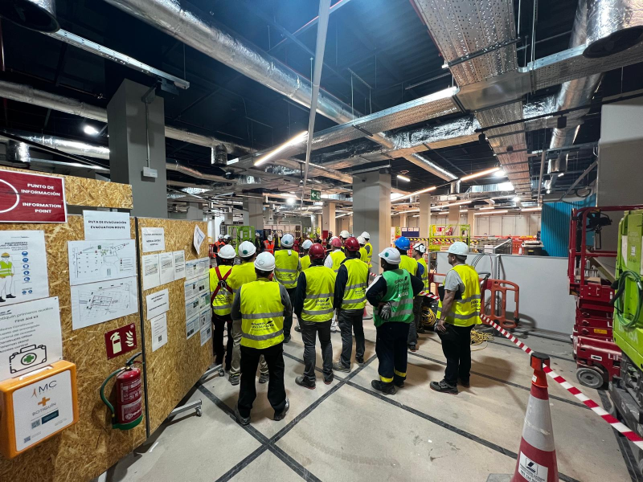
MDS High Quality Prevention sees a recurring challenge in Spain: reliance on documentation without sufficient planning, coordination or on-site supervision. Its approach focuses on checking how preventive measures work in daily activities.
On complex construction projects, MDS examines work procedures, identifies risks from overlapping activities and establishes specific safety protocols. Periodic inspections, coordination meetings and follow-up of corrective actions help teams respond as conditions change. Digital monitoring tools support the traceability of actions, connecting documented requirements with practical oversight on site.
Turning findings into lasting improvements
An inspection report delivers value when its findings lead to action.
For a customer operating multiple sites, Safety Services introduced consistent inspections and audits covering documentation, site conditions and working practices. It recorded findings in its WiSE software, assigned them to responsible individuals, and tracked them through to resolution. Policies were refreshed and training arranged where gaps appeared.
The approach gave the customer clearer oversight and a practical process for addressing hazards: each action had an owner and progress could be checked.
Across the Group, retained advice, training, follow-up inspections and exposure monitoring help customers maintain improvements as workplaces evolve. The shared purpose is to provide reliable evidence and practical support that turn safety requirements into everyday protection.
Discover our specialist expertise
Explore Phenna Group's divisions to find the businesses supporting workplace health, safety and compliance.