 Before construction begins, understanding the ground beneath a site is essential to managing risk. Hidden cavities, variable soil conditions and buried infrastructure can all affect how a project is designed and delivered.
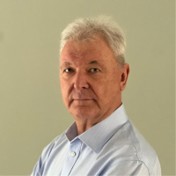
For Kevin Sayers, Business Line Director for Geophysics & Geospatial at CGL, investigating these conditions has been the focus of a career spanning more than four decades. His work shows how specialist testing and inspection provide evidence that engineers need to make informed decisions.
Within Phenna Group's testing, inspection, certification and compliance (TICC) services, Kevin's expertise links ground testing and subsurface inspection with design assurance and project compliance support.
From exploration to engineering
Kevin began his career in the early 1980s, working on seismic surveys for oil and gas exploration. Assignments took him across Central America, the Middle East and the UK, often in remote locations where difficult logistics made careful planning and reliable data collection essential.
In the 1990s, he moved into near-surface geophysics, applying his knowledge to engineering and construction. He later established a specialist business in Bahrain and the Gulf, supporting major developers, designers and energy businesses.
Since then, his career has included work on the Burj Khalifa, Palm Jumeirah, Doha Metro, HS2 and the Lower Thames Crossing. Across these projects, his role has centred on providing dependable evidence about ground conditions before critical decisions are made.
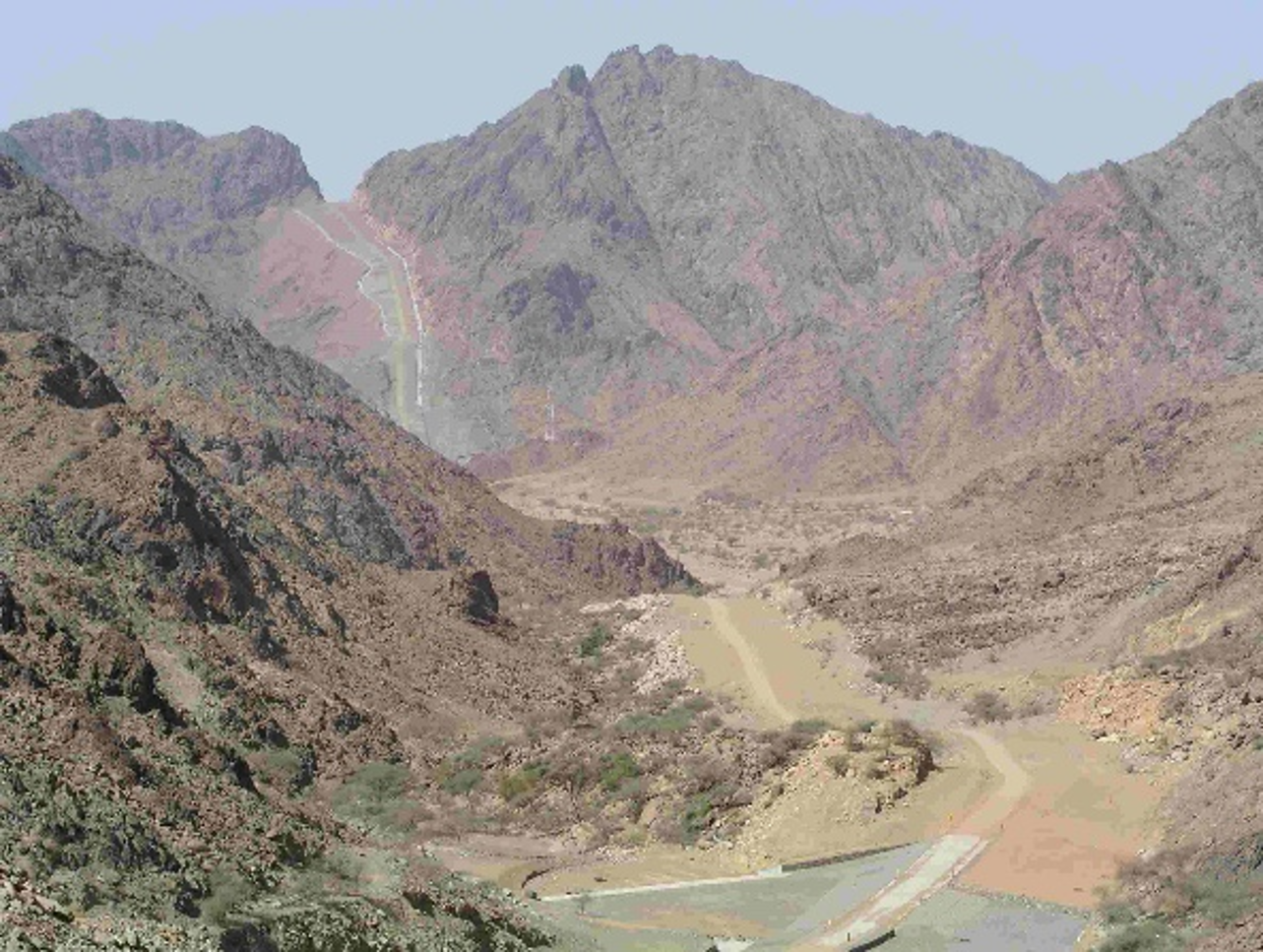
East–West Pipeline corridor, Saudi Arabia. Utility and cavity mapping at all thirteen pump stations meant a three-month journey across the Kingdom between sites.
Testing and inspecting what lies beneath
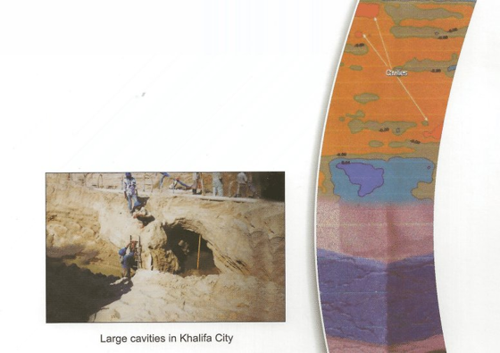
Kevin specialises in geophysical surveys, using physical measurements to investigate conditions beneath the ground or seabed. Techniques such as seismic testing, electrical resistivity surveys, and ground-penetrating radar help identify cavities, buried utilities, and changes in rock and soil.
These methods support subsurface inspection without excavating every area being investigated. They also measure properties such as ground stiffness, helping engineers assess how the ground may respond to a structure's weight.
Used alongside boreholes and other investigations, the results build a more complete picture of a site, including what lies between individual investigation points.
At CGL, Kevin leads the development of geophysical and geospatial services, combining subsurface investigation with accurate location and mapping data. These complement the company's ground investigation, geotechnical design and geoenvironmental assessment capabilities, linking testing and inspection findings to practical engineering advice.
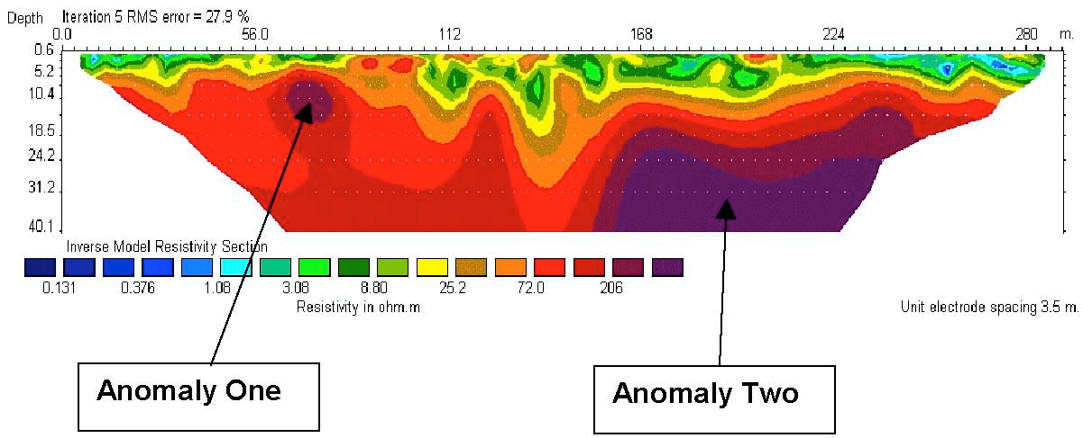
Electrical resistivity section used to separate a proven cavity (Anomaly One) from competent limestone (Anomaly Two) — typical of the karst work undertaken at Uthmaniyah and across the Gulf.
 Evidence that informs design
Kevin's work on the Burj Khalifa demonstrates how specialist testing can influence a project. Deep borehole seismic testing provided measured ground properties to around 100 metres, giving foundation designers evidence on which to base their calculations. The client subsequently revised the foundation design.
On Saudi Aramco's Manifa Causeway, marine investigations established sand volumes, seabed conditions and the stiffness of sediments beneath a harder surface layer. The findings informed a change in causeway geometry, spreading the load over a wider seabed area.
Closer to home, Kevin developed the scope for land and marine geophysical investigations for the Lower Thames Crossing. His involvement included assessing bidders, supervising survey work and reviewing datasets for use in a three-dimensional ground model.
These examples show the practical value of testing and inspection: identifying conditions that could affect a structure and providing evidence to support design decisions.
Reliable results and compliance support
The quality of an investigation depends on how it is specified, delivered and interpreted. Kevin's work includes writing survey requirements, assessing contractors and checking data acquisition, processing and reporting.
These checks help determine whether investigations meet the agreed technical scope and whether the findings suit their intended use.
For clients, reliable testing and inspection records also provide the evidence needed to show that relevant project requirements have been addressed. Kevin's contribution strengthens the technical information on which design assurance and compliance decisions depend.
 Smarter investigation with less disruption
A consistent theme throughout Kevin's work is using geophysics to target intrusive investigations more effectively. Surveys help identify where drilling and sampling will provide the greatest value, while ensuring potential risks receive appropriate attention.
This can reduce unnecessary drilling, plant movement, material waste, and disruption, benefiting project costs and timescales.
Kevin has also used uncrewed survey vessels and explored remote survey technologies. His interest centres on improving the quality and efficiency of testing and inspection while giving clients useful evidence.
Connecting expertise across Phenna Group
As part of Phenna Group's Infrastructure Division, CGL can connect its expertise with complementary ground investigation, laboratory testing, materials testing and structural inspection services.
Collaboration with businesses such as GSTL, SWG, Mason Evans, CTS and Concept broadens the support available to clients, including those delivering complex or large national projects.
Together, these capabilities connect early ground investigations with the testing, inspection and verification needed as construction progresses, giving clients access to a broader TICC offering through Phenna Group.
Sharing knowledge with the next generation
Kevin has spent much of his career training engineers and survey teams to acquire, assess and interpret data properly.
At CGL, he helps younger engineers write clear specifications, question findings and understand how investigation methods work together.
Passing on that judgement helps maintain testing and inspection quality, supporting reliable results and confident decisions for clients.
Explore our Infrastructure expertise
CGL is part of Phenna Group's Infrastructure Division, bringing together specialist ground investigation, testing, inspection and engineering expertise. Discover how our businesses work together to help clients manage risk, meet project requirements and deliver infrastructure with confidence.