Our Careers for Veterans series shares the experiences of colleagues across Phenna Group as they build careers beyond military service. In this feature, we meet Brian Fisher, a Technician at Atlantic Testing Laboratories (ATL), who served for 27 years in the U.S. Army before bringing his technical knowledge and problem-solving skills to a new industry.
Now working primarily in ATL's laboratory in Watertown, New York, Brian helps support construction projects across the region. His story highlights the importance of preparation, keeping an open mind and recognising the value of experience beyond a familiar job title.
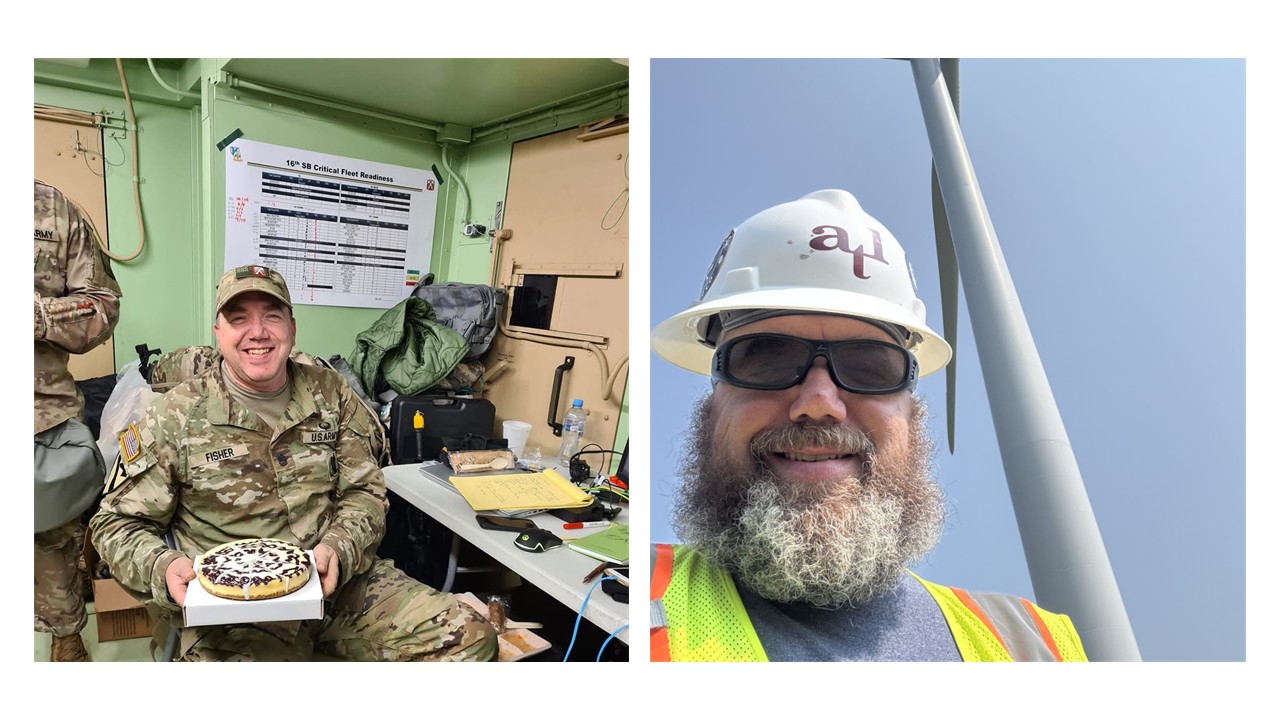
Building a Career in Military Maintenance
Brian retired from the Army as a Sergeant First Class after spending his military career in maintenance and logistics leadership roles. His responsibilities included overseeing maintenance and logistics operations across Europe and North Africa. His final assignment was as Maintenance Supervisor for the 2nd Brigade, 10th Mountain Division, at Fort Drum, New York.
Throughout his service, Brian enjoyed travelling, working alongside allied military partners and ensuring that vehicles and maintenance personnel were ready to support deployments and missions.
The work required him to think ahead, coordinate resources and identify potential problems before they affected operations. These skills would later prove valuable in a different technical environment.
After 27 years, Brian felt ready to retire from the Army, but he wanted to keep working.
"I still wanted to contribute, continue learning, and apply the skills and experience I had gained throughout my military career."
Preparing for a Different Working Life
Brian began planning for retirement around two years before leaving the Army. He researched available support and explored several possible career paths, including military contracting, fleet service management, and project management.
He did not have a fixed destination from the outset. Instead, his plans developed as he learned more about civilian opportunities and considered how they might fit his experience and interests.
Through the Army's Soldier for Life Transition Assistance Program, Brian attended classes covering finances, CV development, education benefits and resources for starting a business.
He also completed a three-month internship with a solar manufacturing start-up while still on active duty. This gave him practical experience of civilian employment and an opportunity to demonstrate how his military background could contribute to the business.
The internship led to his first civilian position as Operations Manager. The company planned to establish operations in Watertown but later began considering other locations. Brian decided relocating was not the right choice for him, prompting another change in direction.
Finding Purpose Beyond the Army
For Brian, one of the biggest challenges was adjusting to the loss of the familiar purpose and direction military life provided.
In the Army, there was always another mission, qualification, promotion or problem to work towards. That shared purpose shaped both his working life and his expectations for career development.
Moving into civilian employment meant adapting to a different pace and finding new ways to measure progress.
"I also wish I had better understood how much my identity was tied to military service and how much of an adjustment it would be to establish a new sense of purpose."
He also discovered that finding a suitable career was not simply a matter of matching his previous job title. In a smaller community such as Watertown, opportunities directly comparable to his senior military responsibilities were limited.
Recognising the skills behind those responsibilities helped him consider a wider range of roles, including work in a new industry.
Applying Experience at ATL
Brian's role at ATL differs from his military maintenance career, but he still draws on many of the same abilities.
Planning ahead is one example. His experience of anticipating operational requirements helps him prepare for increased testing demand before a large construction project begins.
Technical knowledge has also transferred in unexpected ways. Military training in map reading, navigation and interpreting electrical, hydraulic and pneumatic schematics gave him experience that helps when working with engineering drawings.
Although the symbols and terminology may differ, Brian recognises similarities in the underlying concepts. He also brings experience in leadership, logistics, project management and Lean Six Sigma, an approach to improving processes and reducing waste.
Working in construction materials testing has given him opportunities to keep learning while contributing to projects with visible results.
"One of the most rewarding aspects of my current position is seeing the finished projects that I helped support."
Whether it is a road, bridge or another construction project in upstate New York, Brian values knowing that his work behind the scenes has played a part in its delivery.
Advice for Service Leavers
Brian encourages anyone preparing to leave the military to learn from as many people as possible and remain open to unfamiliar career paths.
"Be open to the possibility that your next career may not look anything like your military career."
He recommends considering training that applies across industries, including project management, personnel management, Lean Six Sigma, and Agile approaches to organising work.
Networking and mentorship are also important to him. Professional connections can help veterans understand opportunities, while a mentor can offer practical guidance and encouragement through unfamiliar challenges.
Brian also stresses the importance of financial preparation, allowing time to explore opportunities and adjust to civilian employment.
Above all, confidence in his ability to adapt helped him move forward. After overcoming challenges throughout 27 years of service, he knew he had experience to draw on when faced with something new.
"Staying calm, remaining flexible, and focusing on solutions instead of problems has helped me navigate the transition successfully."
Recognising Experience Across Phenna Group
Brian's journey shows how a career change can create new opportunities to apply established skills.
His work at ATL draws on the planning, technical understanding and attention to quality developed during military service, while giving him the opportunity to learn about a different industry and support infrastructure projects in his region.
We thank Brian for sharing his experiences and offering practical advice to others preparing for their own transition into civilian life.
Explore your next career with Phenna Group
Visit our Careers for Veterans, Service Members and Military Families page to discover more colleague stories and learn about opportunities across the Group.