
Geotechnical engineering begins with understanding what lies beneath a project. Across the Northeast United States, engineers may encounter shallow bedrock, dense glacial deposits, soft marine clays, historic fill and high groundwater. In Central Texas, expansive clays and changing moisture levels present different challenges for foundations, pavements and infrastructure.
Regional experience is therefore essential. Through Atlantic Testing Laboratories, Briggs Engineering & Testing, and MLA Geotechnical, Phenna Group connects businesses with deep local knowledge and complementary geotechnical inspection, testing, and engineering capabilities.
Within Phenna Group's wider testing, inspection, certification and compliance offering, subsurface investigations principally represent inspection activities, while geotechnical engineering draws on inspection and testing to inform technical recommendations and design. By sharing expertise, specialist equipment and project experience, the businesses can support more complex requirements while retaining the responsive, locally informed service their customers value.
Why local knowledge matters
As MLA Geotechnical explains, geotechnical engineering can be "part science and part art". Site investigations provide essential project data, but experienced local specialists can place the findings within a broader context. Their knowledge of local ground conditions helps project teams identify risks earlier, select suitable investigation and testing methods and develop practical solutions for the site.
A landscape shaped by glaciation
Atlantic Testing Laboratories (ATL) has provided technical support services for more than 55 years. With 11 offices and more than 300 employees across New York State, it supports projects throughout the Northeast and receives laboratory samples from across the United States and internationally.
Its TICC capabilities include subsurface investigations on land and water, environmental and laboratory testing, special inspection, construction materials testing and non-destructive testing, supported by geotechnical engineering expertise.
New York's geology has been shaped by several glacial advances and retreats, creating conditions that can vary significantly between locations. ATL has developed a database of boring logs from more than 7,000 projects. This regional knowledge helps its specialists anticipate likely conditions before an investigation begins and determine an appropriate approach for each site.
ATL supports transportation, power, industrial, water and wastewater, healthcare, commercial and education projects, including bridges, highways, wind farms, substations, hospitals and major utility infrastructure.


Complex conditions across New England
Briggs Engineering & Testing provides construction inspection, materials testing, non-destructive examination, geotechnical and earthwork services across New England.
The region presents challenges ranging from shallow bedrock and glacial deposits to soft marine soils, high groundwater and historic fill. These conditions often come with dense urban environments, ageing infrastructure, limited site access, and utility conflicts. Coastal developments must also consider flood risk and resilience, while seasonal weather and freeze-thaw cycles can affect both design and construction.
Briggs' regional experience helps its team identify subsurface, construction, and regulatory challenges early, helping customers manage risk and avoid unnecessary delays.
Briggs and ATL have already begun sharing opportunities and combining their TICC capabilities. One example is Briggs' work on the I-195 Washington Bridge reconstruction in Rhode Island.
Briggs is supporting Walsh Construction as the project's testing and inspection agency, providing construction materials testing and quality assurance across concrete, reinforcing steel, soils and earthworks, structural steel, masonry, precast concrete and asphalt. Its scope also includes dynamic pile testing for the bridge foundations.
During procurement, ATL contributed additional specialist capabilities to support Briggs' proposal. This enabled Briggs to present a more coordinated response to the project's quality assurance, inspection and testing requirements. For the customer, it provided clearer coordination and access to a broader range of expertise through the Briggs team.

A different set of challenges in Texas
Headquartered in Austin, MLA Geotechnical provides geotechnical inspection and engineering services, along with construction materials testing, across Central Texas. The business supports infrastructure development and residential construction, including earthworks, utilities, pavements, retaining walls and foundation design.
Ground conditions in the region range from hard limestone to expansive clay. Expansive soils change volume as their moisture content changes, creating movement that must be considered when designing foundations, pavements and other infrastructure.
MLA has extensive experience designing for these conditions, and its engineers have contributed to slab-on-ground design guidance used in building codes.
As MLA grows, it can draw on knowledge from elsewhere in the Phenna Group network for projects involving low-bearing-capacity soils, difficult slope stability conditions or other challenges less commonly encountered in Central Texas. In return, MLA's experience with expansive soils can support other businesses facing similar conditions.
Supporting customers across regions
Connecting ATL, Briggs and MLA gives each business access to a wider pool of technical knowledge, TICC services, specialist equipment and laboratory capacity. It also allows teams to introduce complementary capabilities or provide additional support when a customer moves into a new region.
This approach is particularly valuable for customers operating across multiple states. They can access additional inspection, testing and geotechnical expertise while continuing to work through businesses that understand their local conditions and requirements.
Each business retains its identity, customer relationships and entrepreneurial spirit while benefiting from Phenna Group scale and expertise.
Technology supporting geotechnical TICC services
Technology is changing how ground conditions and construction performance are investigated, tested and monitored.
ATL is seeing increased use of non-destructive technologies, including seismic and electrical resistivity testing. These techniques complement traditional subsurface investigations and provide additional information to support safe and efficient designs.
Briggs is using remote monitoring for activities such as vibration monitoring, while MLA sees opportunities for artificial intelligence to improve reporting from field and laboratory activities. Sharing experience across the network will help the businesses assess where these technologies can provide practical benefits for customers.
Combining local knowledge with Phenna Group support
ATL, Briggs and MLA each bring distinct regional knowledge, technical capabilities and customer relationships. By connecting this expertise, Phenna Group is developing a stronger network of geotechnical inspection, testing and engineering services across the United States.
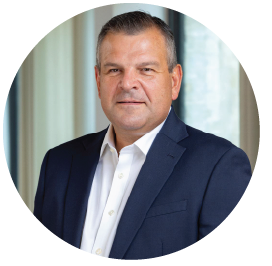 Eric D'Orio, Managing Director, Americas at Phenna Group, said: "The technical expertise within our businesses is exceptional. By sharing knowledge and capabilities, our teams can support customers with increasingly complex testing and inspection requirements while retaining the local experience and relationships that make each business successful.
We are also keen to speak with other high-quality TICC businesses interested in partnering with Phenna Group and exploring how our scale and expertise could support their next stage of growth."
Looking for geotechnical expertise?
Whether you need support with a regional project or specialist inspection and testing capabilities across multiple locations, our geotechnical businesses can help.
Interested in partnering with Phenna Group?
We partner with ambitious testing, inspection, certification, and compliance businesses that want to accelerate growth while retaining their identity, customer relationships, and entrepreneurial spirit.